
Battery incentives for apartment buildings
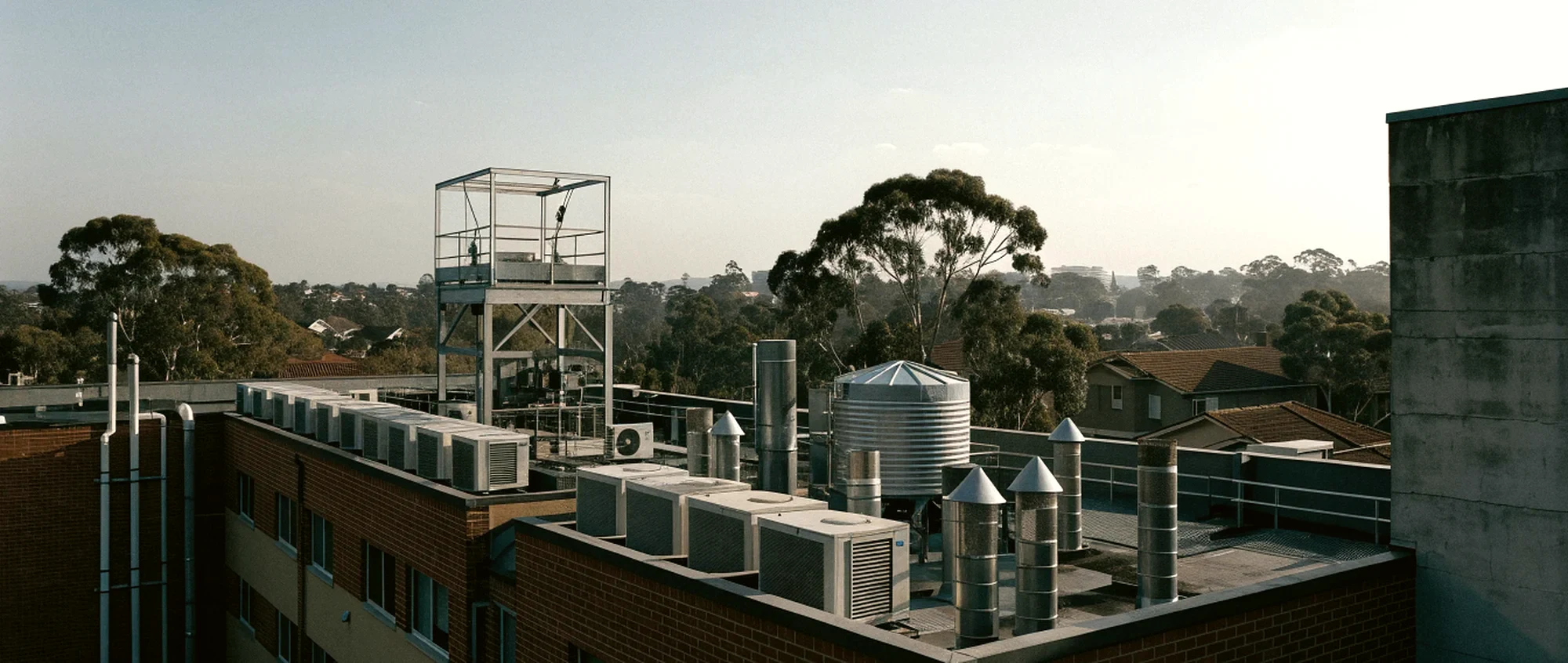
Apartment buildings sit under their own activity, and the roof has historically been the thing that stops the project rather than the economics.
The activity, and what makes it different
One of the three activities commencing on 1 September 2026 covers residential flat buildings: Class 2 under the National Construction Code, above a dwelling threshold1.
Unlike the two activities aimed at business premises, it does not require solar on site. That single difference is worth more to a strata building than it first appears.
Why the roof has been the blocker
Apartment roofs are contested space. Plant, lift overruns, common property, and shading from whatever was built next door. Available area is often a fraction of the building's footprint, and what remains is rarely well oriented.
So a proposal that requires an array before anything else can happen tends to stall at the same point: a feasibility discussion about a roof that was never going to carry much.
Storage on its own changes the sequence. A building can install the battery first and look at generation later, or not at all. The energy case stops depending on a roof assessment that keeps coming back marginal.
What stacks
The activity has been reported as stackable with the federal Cheaper Home Batteries Program, up to a capacity limit2.
Two federal conditions are worth knowing because they surprise people. The battery must be paired with solar, new or existing, which is a federal requirement rather than a NSW one, and it is the point where the two schemes stop lining up neatly for a building with no array. And a grid connected battery must be capable of joining a virtual power plant, though actually joining one remains a choice.
For strata managers
This is worth raising at the next committee meeting. Not because anything is closing, since the activities sit inside an ongoing scheme with no deadline, but because the eligibility is new.
Most energy proposals currently in front of committees were written before it existed. A proposal built on the assumption that solar comes first may now be recommending the wrong sequence, and a battery first option may not have been priced at all.
If you manage a building and want to know whether it qualifies as it stands, send it to us and we will tell you.
Strata, and who talks to whom
Strata work is contracting work, so New Ability Energy leads it. They have done multi-residential and body-corporate jobs, and they hold the contract and the licence the building will be asking about.
Solar Up supplies the equipment. If you are a strata manager and want the equipment question answered first, start with us and we will bring them in.
Sources
- Batteries for apartment buildings incentive. NSW Climate and Energy Action.
- Cheaper Home Batteries Program. Department of Climate Change, Energy, the Environment and Water.
We check this for your address
Incentives change, and they change by building, by capacity and by whether there is already solar on the site. Working out which ones apply to you is part of the design, not an extra.