
Why a battery-only proposal does not qualify
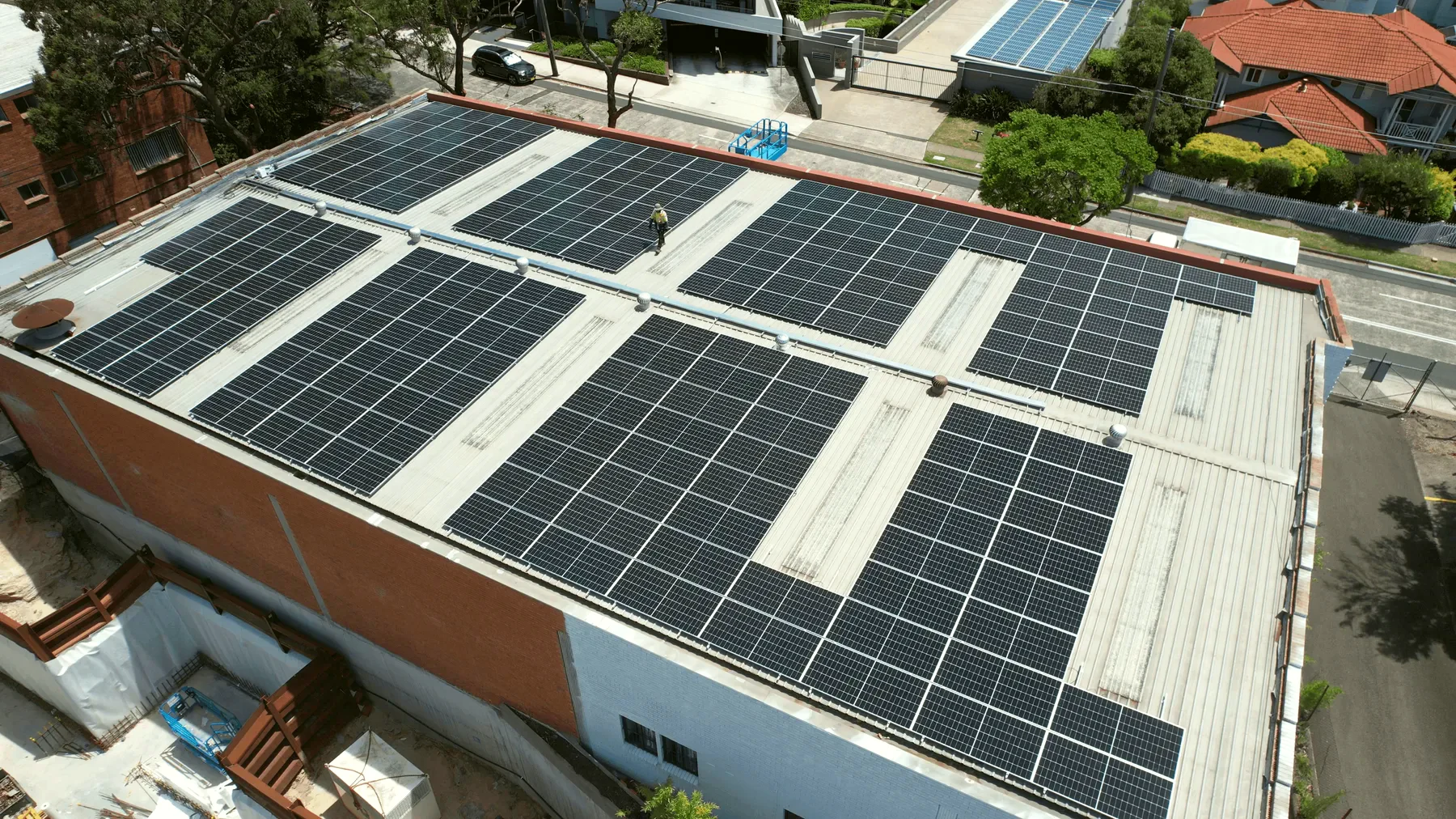
A condition that catches people out often enough to be worth stating on its own page: the battery is not assessed on its own.
The condition
If you are holding a quote for a commercial battery in NSW with no solar anywhere in the scope, there is a reasonable chance it does not qualify for the incentive it assumes. This is the single condition most likely to catch a proposal out, and it is not obvious from a reading of the announcement.
Two of the three battery activities, the ones covering business and industrial sites, require solar PV on site. Either already installed or included in the same scope of works, at a fixed ratio to the battery's capacity1.
The apartment activity does not carry this requirement. A residential flat building can install storage on its own and qualify.
For the two business activities, read the requirement literally. A battery only proposal does not qualify for a reduced amount. It does not qualify.
The part that catches people out
There is a second order version of this problem that is easier to miss, and it affects sites that already have solar.
Arrays are normally sized against the building's load: how much electricity the site uses, and when. That is the right way to size an array for its own sake. It has nothing to do with the ratio the battery requires.
So a site can have a perfectly good existing array, add a battery, and still fall short of the threshold. The array was sized for one job and is now being asked to satisfy a different test.
The fix is a resize, and a resize is rarely just more panels. It is far less expensive to discover before a proposal goes to a board than after the array is installed.
Why the rule is there at all
The Peak Demand Reduction Scheme2 exists to reduce demand on the network at peak times. Read against that purpose, a solar requirement is consistent: storage paired with on site generation shifts load off the network, where storage charged entirely from the grid moves the problem rather than reducing it.
That is an interpretation rather than an official statement of intent, but it is a useful one. It tells you the ratio is a design condition, not administrative paperwork, and that satisfying it on a technicality is unlikely to be a good idea.
Three checks, on any proposal in front of you
Does the scope include solar, existing or new. Has the ratio been demonstrated against the actual proposed array, or just asserted. And if it falls short, does the proposal say what would have to change.
If the answer to the third is missing, that is the question worth asking first.
What we check before designing
We check the solar condition against the actual proposed array rather than against an assumption, because that is the check that fails quietly in someone else's proposal and shows up after you have signed.
If a battery-only system is genuinely the right answer for your site, we will design one. You will just know, in writing, that it is not carrying the incentive.
Sources
- NSW commercial battery rebate: how the new PDRS incentives work. Solar Choice.
- Peak Demand Reduction Scheme. NSW Climate and Energy Action.
We check this for your address
Incentives change, and they change by building, by capacity and by whether there is already solar on the site. Working out which ones apply to you is part of the design, not an extra.