
Read the quote before the price
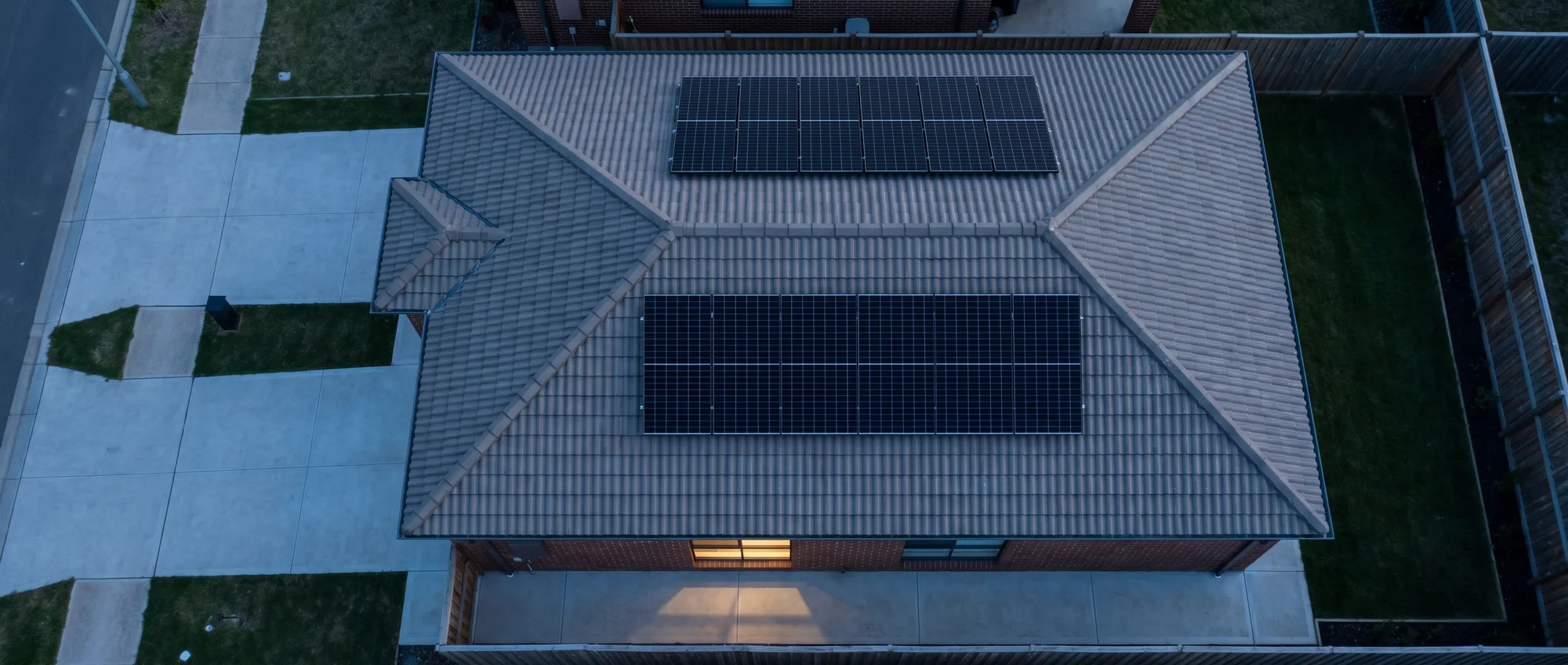
Three quotes for the same house will name different panels, different inverters and different usable capacity. Six lines make them comparable, and the price is the last one to look at.
The price is the last line
Most people compare solar quotes the way they compare anything else. Three numbers, one is lowest, the conversation starts there.
It does not work here, and the reason is straightforward. A solar quote is not a price for a product. It is a price for a design, and the designs are different. Panel count, panel model, inverter rating, battery capacity, export position, who does the install and who honours each warranty all vary between the three envelopes on the table, and most of them are not printed on the front page.
So the total at the bottom is comparing systems that were never the same system. Two quotes can be within a few hundred dollars of each other and describe installations that will behave differently for the next 20 years.
There is a pattern worth knowing before you start. The shortest specification is very often attached to the lowest number, because a quote that does not name the inverter has not committed to one. Vagueness is not an oversight in that situation. It is flexibility, and the flexibility belongs to whoever wrote the quote.
The fix is to read the specification first and let the price be the last line you look at. Six lines do the work.
Six lines a quote has to carry
Every one of these belongs on a compliant residential quote already. None of them requires a technical background to check. What they need is for all three quotes to state them, so the comparison is between like and like.
| The line | What it has to state | Why it decides something |
|---|---|---|
| System size | Panel count, panel make and model, total kilowatts | Two systems at the same kilowatt rating can carry very different panels |
| Inverter | Make, model and its rating in kilowatts | The inverter sets what the system can actually deliver to the house |
| Battery | Nameplate capacity and usable capacity, both stated | Usable is the number the house gets. Nameplate is the number on the box |
| Export position | The limit applied for, and the network's response | It changes what the system is designed to do, not just what it earns |
| Warranties | Product, performance and workmanship, listed apart, each with the holder named | Three different terms, held by three different parties |
| Who installs it | The licensed installer, named, with the accreditation held | The installer carries the contract, the compliance and the workmanship warranty |
If a line is missing, ask for it in writing before comparing prices. A quote that will not put the export position on paper has not had the conversation with the network yet.
Work down the list on all three quotes before looking at any total. It usually takes 15 minutes and it usually changes which quote is actually the strongest.
If the three quotes arrive in three different formats, put them into one. A single page with six rows and three columns takes a few minutes to build and does more than any amount of reading, because the gaps become visible the moment the columns sit next to each other.
Check the equipment against the list
Two lists and two standards govern what can be installed on a house in Australia, and both lists are public.
The Clean Energy Council publishes an approved inverters list1 and an approved batteries list2. Equipment on those lists has been assessed against the relevant standard. Equipment not on them cannot be installed under the schemes that reduce the price, which means an off-list product is not a saving, it is a system that does not qualify.
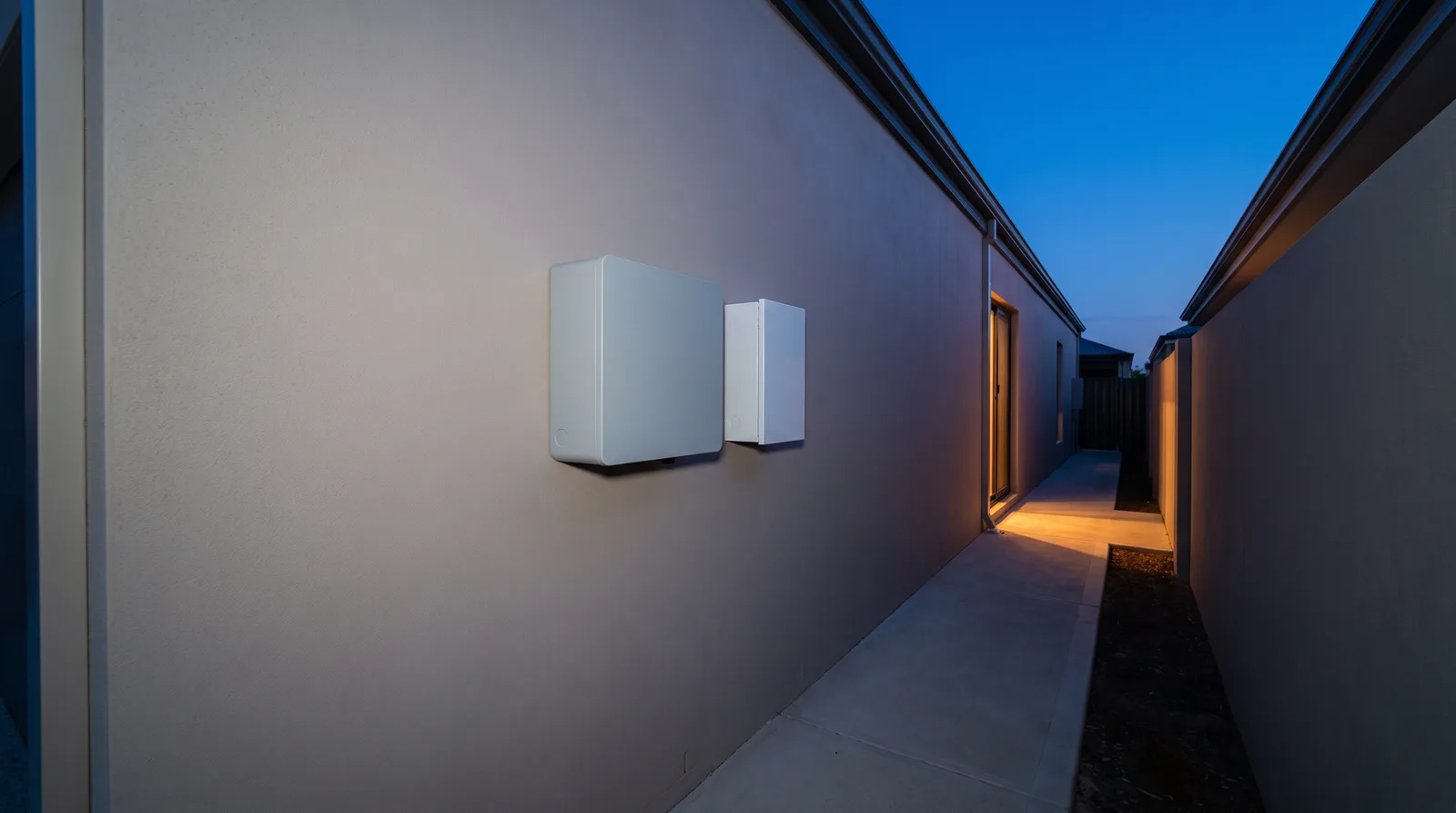
The standards underneath are AS/NZS 4777.2, which covers grid connection through inverters3, and AS/NZS 5139, which covers the safety of battery systems installed with power conversion equipment4. You do not need to read either. You need the quote to name the equipment specifically enough that you can find it on the list yourself.
A quote that says "6.6 kW system with premium panels and a 5 kW inverter" has not named anything. A quote that names the make, the model and the rating has.
Nameplate is not usable
Battery capacity is quoted two ways, and the difference is real.
Nameplate capacity is the total energy the cells hold. Usable capacity is the portion the system will actually discharge, after the reserve the manufacturer keeps back to protect the cells and after whatever the installer sets aside for backup. Both numbers are on the datasheet. Only one of them powers anything.
Usable capacity is the number the house actually gets.
So a quote that states nameplate only is quoting the larger of two numbers without saying which one it is. Ask for both, on all three quotes, and compare usable against usable.
The same applies to the backup question, and it is worth asking plainly. Does the battery keep the house running when the grid goes down, does it run a selected circuit, or does it run nothing. All three are legitimate designs at different prices, and they are not the same product. The answer belongs on the quote.
Two further numbers sit on the battery datasheet and belong in the same conversation. The warranted throughput or cycle count, which is how the manufacturer expresses the battery's working life, and the continuous power output in kilowatts, which decides how much of the house the battery can run at once. Capacity is how long. Power is how much. A quote that states one without the other has described half the product.
Find the export position
Every system connected to the grid is connected on terms the network sets, and those terms are decided per site, not per product.
There are three outcomes. The system is approved as proposed. It is approved with a limit on how much it may export. Or the network requires works before it will approve anything. A limit is common and it is not a problem in itself, but it changes the design: a limited site is worth optimising toward using its own generation rather than sending it out, which usually means the storage question is asked differently.
What matters at quote stage is whether the installer has applied, what they applied for, and what came back. An installer who has done this will tell you in a sentence. An installer who has not will describe it as a formality that gets handled later, which is the answer that turns into a variation.
Nothing about the incentive changes the export position. The federal battery programme and the New South Wales incentives decide how support is applied to the invoice56. The network decides what the site is permitted to do.
If you want to move this along, send the installer a recent bill and your address at the first conversation. The bill carries the National Metering Identifier and the consumption history, which is what both the design and the connection application need. Everything after that is faster.
Read the warranties apart
There are at least four warranties in a solar and battery installation, and they are held by different parties for different periods.
The panel product warranty covers the panel as a physical object. The panel performance warranty is a separate promise about output over time, and it degrades on a published curve rather than holding flat. The inverter and the battery each carry their own manufacturer terms, and battery terms are frequently expressed in cycles or throughput as well as years. The workmanship warranty covers the installation itself: the mounting, the wiring, the penetrations through the roof.
That last one is the one that gets tested first, and it is the one held by the installer rather than by a manufacturer overseas. Which is why the installer's name on the quote is a warranty question, not an administrative detail.
One more question is worth asking, and it is uncomfortable enough that most people skip it. What happens if the manufacturer leaves the Australian market. The honest answer is that a manufacturer warranty is only as good as the entity honouring it, which is the argument for equipment from established suppliers with local presence, and for an installer who will still be here to make the claim on your behalf.
Solar Up is the renewable arm of New Ability Energy and buys equipment as an authorised distributor. New Ability Energy holds the installer role, the contract, the accreditation and the workmanship warranty on every system. One company to call, for the life of the installation.
Know the order of the job
The last thing worth reading on a quote is the sequence, because that is what sets the date and it is the part most often left vague.
- 01 Design and quote System sized against the roof, the orientation and the household's own consumption. Solar Up
- 02 Site check Roof structure, switchboard, meter position and cable runs confirmed on site rather than assumed. New Ability Energy
- 03 Network application Connection applied for. The network returns an approval, an export limit, or a requirement for works. The network
- 04 Installation Mounting, panels, inverter, battery and switchboard work, by the licensed crew. New Ability Energy
- 05 Testing and compliance Commissioning, the certificate of compliance, and the paperwork the schemes require. New Ability Energy
- 06 Meter change and switch-on The retailer reconfigures or replaces the meter. The system exports from that point. Your retailer
Two of the six sit with the network and the retailer. They are the steps that set the date, and no installer can compress them. Any quote promising a switch-on date without a network response is promising something it does not hold.
Ask which step each quote is currently at. It is a more useful question than asking how long the job takes, and the answers separate the three quotes faster than anything else on this page.
Expectations are easier to hold when the sequence is visible. Most of the wait is not installation. Installation is a day, occasionally two. The wait is the network response at step three and the meter change at step six, and knowing that in advance is the difference between a project that feels slow and one that feels normal.
Sources
- Approved inverters. Clean Energy Council.
- Approved batteries. Clean Energy Council.
- AS/NZS 4777.2, Grid connection of energy systems via inverters, Part 2: Inverter requirements. Standards Australia.
- AS/NZS 5139, Electrical installations, Safety of battery systems for use with power conversion equipment. Standards Australia.
- Cheaper Home Batteries Program. Department of Climate Change, Energy, the Environment and Water.
- Install a battery. NSW Climate and Energy Action.
Keep reading
The inverter decides more than the panel does
We check this for your address
Incentives change, and they change by building, by capacity and by whether there is already solar on the site. Working out which ones apply to you is part of the design, not an extra.